The Hairline Crack That Cost $400 to Dry
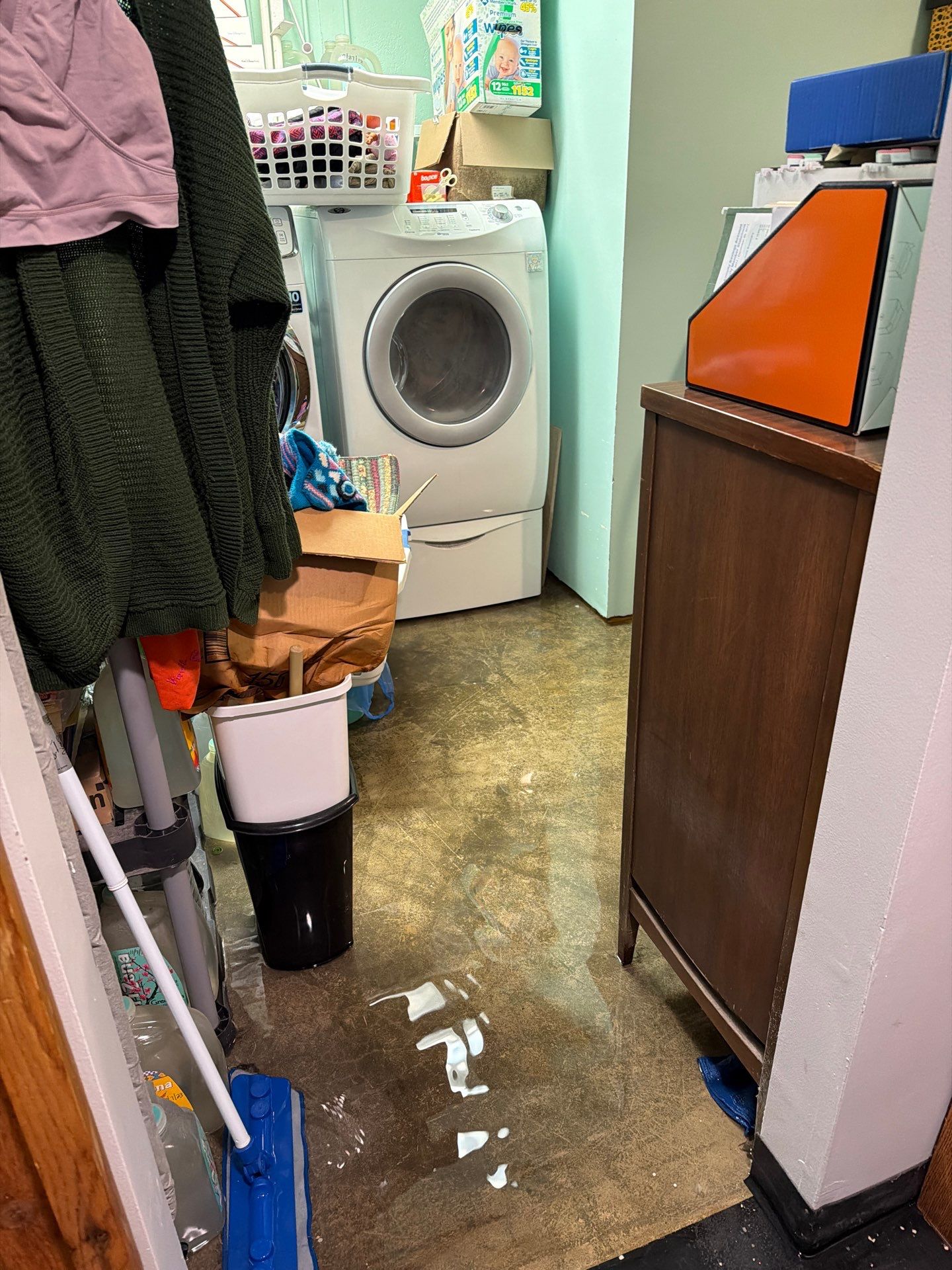
One Rockville homeowner called us on a Sunday afternoon in April. She had noticed a damp spot along the north wall of her finished basement after two days of steady rain. When our technician arrived (within 2 hours of dispatch), we found a vertical crack about thirty inches long, weeping slowly. The carpet pad was saturated in a three foot radius. Drywall was wet up to about six inches.
We pulled back the carpet, removed the wet pad, set two air movers and a small dehumidifier, and monitored moisture readings daily for three days. Total invoice came in around $400 because we caught it early. The drywall dried in place. The carpet was reinstalled. She called a foundation contractor the following week to seal the crack from the outside. That is the best case version of this story, and it happens when homeowners trust their nose and call before mold takes hold. If you want the science behind that timeline, our piece on how fast mold grows after water damage walks through the 48 hour rule we work against.
What made this job stay small was honestly luck combined with a homeowner who acted. She had been in the basement that morning to grab something from a storage closet. If she had been traveling that week, or if the spot had been behind a couch instead of along an open wall, we would have been writing a very different invoice. We tell every customer the same thing: a small wet spot on Sunday becomes a structural drying job by Wednesday and a mold remediation by the following weekend. The clock does not pause.
The Finished Basement That Lost Eight Feet of Drywall
A different call, a different outcome. A homeowner in a 1970s Rockville ranch had been ignoring a musty smell in her finished basement for most of a winter. When spring rains hit, water poured through a horizontal crack along the cold joint and ran behind her paneling. By the time she called us, the bottom two feet of drywall had turned black with mold growth on the back side. The carpet, pad, and tack strip were a total loss.
Our crew set up containment, ran negative air, and removed roughly eight linear feet of drywall and insulation along that wall. Category 2 protocols applied because the water had been sitting long enough to support microbial growth. Drying took five days. Final cost before reconstruction landed near $4,800. The structural repair to the crack itself was another $1,900 through a foundation specialist. Cases like this are why we wrote about how much drywall has to come out after water damage, because the answer is almost always more than homeowners expect.
The homeowner asked us the question we hear most often on these long running jobs: could she have just bleached the visible mold and saved the drywall. The honest answer is no. By the time mold is visible on the painted side, the back side and the paper facing on the insulation are usually colonized. Surface treatment leaves the root structure intact, and the smell comes back within weeks. Removing the affected material is the only path that holds up.
The Call Where We Said No
Not every call ends with us writing a contract. A Rockville homeowner called last fall after a thunderstorm pushed two inches of water across his unfinished basement floor. By the time we arrived, the water had already receded through the floor drain. The slab was damp but the crack he was worried about was bone dry to a meter. We told him directly: there is no restoration work here. Run a fan, watch the crack during the next heavy rain, and call a foundation contractor if it weeps again. We charged nothing for the assessment. He called us six months later for a kitchen leak, which is how that conversation tends to work out.
We mention this story because homeowners sometimes hesitate to call out of fear they will be talked into work they do not need. Rockville Water Restoration would rather walk away from a small job and earn the next one than oversell a damp slab. If the moisture meter says dry, we say dry.
What We Actually Do When We Arrive
For homeowners who have never been through this, here is the short version of what our first visit looks like:
- Walk the perimeter inside and outside to identify the crack and any other intrusion points
- Take moisture readings on drywall, baseboards, framing, and slab
- Map affected areas with thermal imaging when needed, which we cover in our piece on moisture mapping with thermal imaging
- Categorize the water (Category 1, 2, or 3) per IICRC S500
- Give you a written scope and a real number before equipment is set
What These Cases Tend to Cost
Here is what we see across a typical year of foundation crack intrusion work in Central Indiana. These are the restoration costs only, not the structural crack repair. An unfinished basement caught within the first day or two of intrusion typically runs $300 to $600, mostly equipment time and a service call. A finished basement with a small affected area, maybe one wall section and a strip of carpet, lands in the $1,500 to $2,500 range. Once we are removing drywall and insulation along a full wall, expect $3,500 to $5,500. Long term intrusion with established mold growth, the kind that has been seeping for a season or more, runs $7,000 to $10,000 before any reconstruction work begins.
The structural side, meaning the actual crack sealing or interior drain tile or exterior excavation, is a separate trade and a separate invoice. We coordinate with foundation specialists in the Rockville area regularly, and Rockville Water Restoration can usually point you toward two or three reputable options once the drying is complete.
Why Timing Changes Everything
The single biggest variable in foundation crack restoration is how long water has been moving. Every story above turned on that one factor. The 30-inch crack that cost $400 was found on day one. The 1970s ranch was found at month four. Same crack pattern, same square footage, completely different invoices. If you see water near a foundation crack today, the smartest call is the one you make today. Rockville Water Restoration dispatches across Rockville within 2 hours in most cases, and the assessment costs nothing if there is no work to do.